Rescue Mission invites individuals and organisations to support humanitarian work through giving and fundraising. Emergency appeals help focus attention on urgent needs and the recovery challenges that follow.
When a crisis is unfolding, communities may require clean water, food, hygiene materials, shelter and help accessing services. Needs can change as the situation evolves.
Rescue Mission’s published emergency approach combines timely relief with preparation and longer-term recovery. The emphasis is on understanding conditions locally and supporting communities to regain stability.

The right support depends on the crisis, access conditions and what affected communities identify as priorities.
An appeal communicates the need clearly, without sensationalism or unverified impact promises. The most useful message explains which essentials are relevant and how supporters can take part.
People can help by donating, organising a fundraising activity or inviting others to learn about Rescue Mission’s work. Gifts should be made through the charity’s own published channels.
Priorities should be reviewed as the emergency evolves. Practical help is most useful when it reaches the right people, at the right time, in a safe and dignified way.
Emergency needs overlap. A useful response connects practical assistance to the longer-term conditions people face.
• Keep local needs and safe access at the centre of planning.
• Recognise that risks can change after the initial disaster or displacement.
• Link immediate essential support to recovery, dignity and preparedness.
Rescue Mission’s emergency page references displacement linked to conflict, including the Rohingya situation. An appeal addressing such a need might explain the pressure on clean water, shelter and basic essentials. This is a description of appeal content, not a claim of a live, earmarked Rescue Mission campaign.
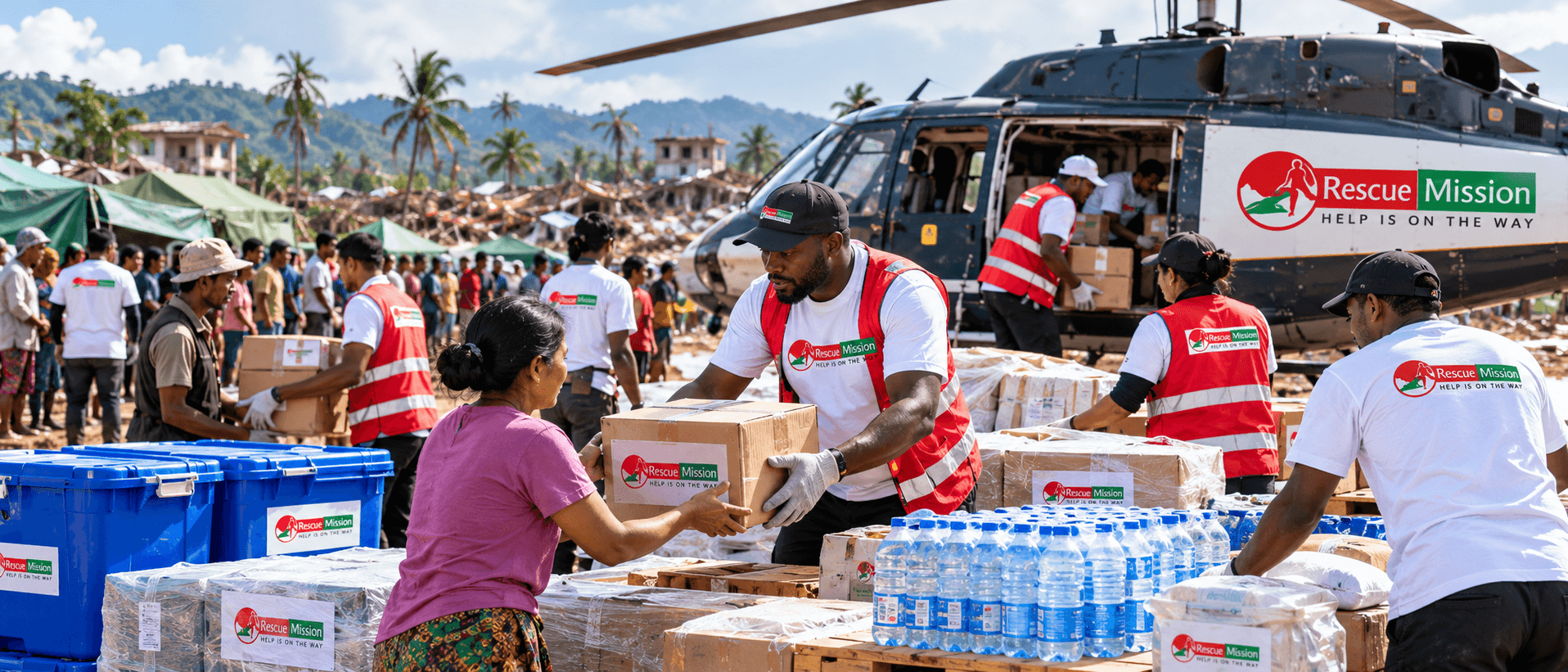
CRISIS CONTEXT: A DISPLACED COMMUNITY
Rescue Mission’s emergency page references displacement linked to conflict, including the Rohingya situation. An appeal addressing such a need might explain the pressure on clean water, shelter and basic essentials. This is a description of appeal content, not a claim of a live, earmarked Rescue Mission campaign.
The source names crises and describes needs. This concept page does not invent an individual’s identity, a first-person testimonial or unverified figures for Rescue Mission projects.
Working with local people helps define what is needed, how support should reach communities and what recovery should look like.
Appeal messages should reflect community priorities and avoid portraying people solely as passive recipients. Local partners and affected communities help establish what support is useful.
Listening, coordination and informed decisions help make aid more practical and respectful.

Rescue Mission describes training local staff and community members in disaster preparedness, along with local-led decisions during response and recovery.
The need often continues after an appeal’s initial publicity. Longer-term support can help communities return to safer and more stable conditions.
The work of rebuilding may involve livelihood support, safer services, local planning and disaster risk reduction. Rescue Mission’s published material places this continuing work alongside the first emergency response.
Visit Rescue Mission’s official donation page and share the opportunity to get involved.
Bringing Hope, Protecting Children and Building Stronger Communities.
Rescue Mission is a registered company limited by guarantee (Company No. 10413275) Registered Charity No. 1196944 (England & Wales) 20-22 Wenlock Road, London, N1 7GU, England, United Kingdom
