Give, fundraise and stand with affected communities.
Supporters and sponsors are central to Rescue Mission’s published fundraising approach. The charity invites one-off or regular donations and encourages people to organise community and workplace fundraising activities.
Different crises demand different forms of assistance. Flexible support can help charities focus on urgent needs such as essential supplies and also maintain attention on recovery and preparedness.
Rescue Mission’s published emergency approach combines timely relief with preparation and longer-term recovery. The emphasis is on understanding conditions locally and supporting communities to regain stability.

The right support depends on the crisis, access conditions and what affected communities identify as priorities.
A supporter can begin with a direct gift or decide to raise funds through a community group, workplace or personal challenge. The most important step is to use recognised charity channels.
Good fundraising describes the cause fairly, avoids unverified promises and clearly directs donations to the organisation receiving them.
Priorities should be reviewed as the emergency evolves. Practical help is most useful when it reaches the right people, at the right time, in a safe and dignified way.
Emergency needs overlap. A useful response connects practical assistance to the longer-term conditions people face.
• Keep local needs and safe access at the centre of planning.
• Recognise that risks can change after the initial disaster or displacement.
• Link immediate essential support to recovery, dignity and preparedness.
A group of adult volunteers organises an event, shares the purpose of the appeal, collects contributions through the official donation route and encourages supporters to learn more about emergency response. This is a suggested fundraising journey, not an account of an actual Rescue Mission event.
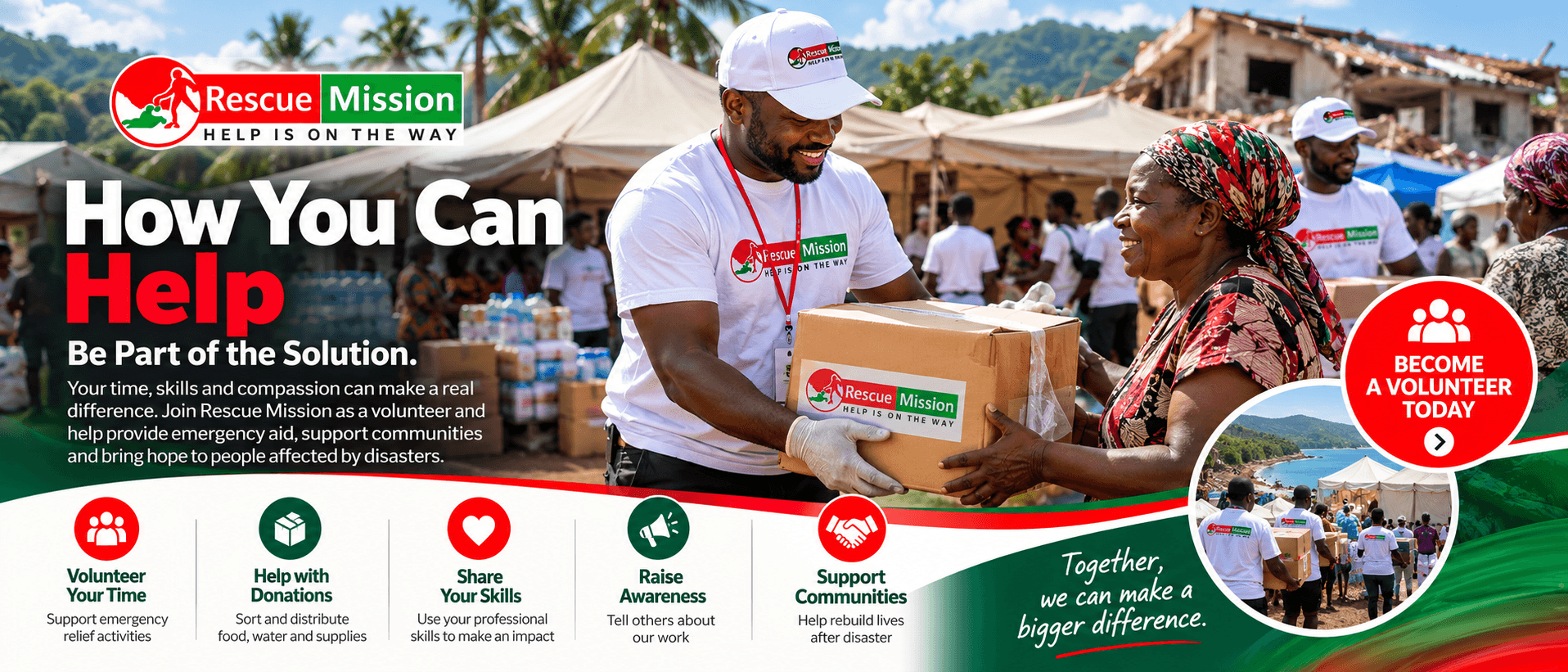
ILLUSTRATIVE SUPPORTER JOURNEY: COMMUNITY FUNDRAISING
A group of adult volunteers organises an event, shares the purpose of the appeal, collects contributions through the official donation route and encourages supporters to learn more about emergency response. This is a suggested fundraising journey, not an account of an actual Rescue Mission event.
The source names crises and describes needs. This concept page does not invent an individual’s identity, a first-person testimonial or unverified figures for Rescue Mission projects.
Working with local people helps define what is needed, how support should reach communities and what recovery should look like.
Supporting local action involves more than finance. Public understanding, volunteering and informed participation can also strengthen a community-focused emergency response.
Listening, coordination and informed decisions help make aid more practical and respectful.
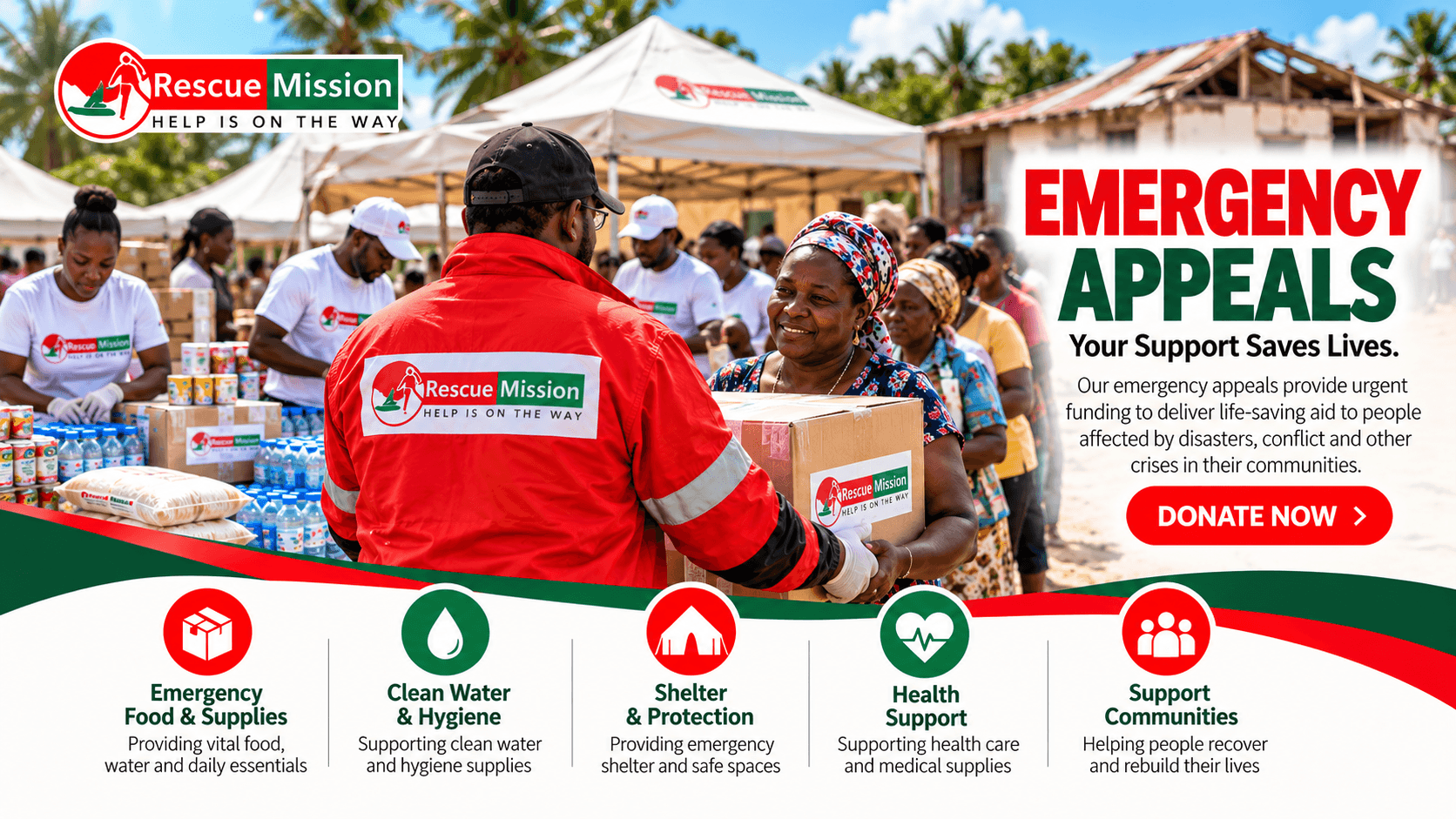
Rescue Mission describes training local staff and community members in disaster preparedness, along with local-led decisions during response and recovery.
Support that lasts beyond an immediate crisis can make it easier to continue preparedness, restore livelihoods and strengthen resilience.
The work of rebuilding may involve livelihood support, safer services, local planning and disaster risk reduction. Rescue Mission’s published material places this continuing work alongside the first emergency response.
Donate Now or Get Involved using Rescue Mission’s published website.
Bringing Hope, Protecting Children and Building Stronger Communities.
Rescue Mission is a registered company limited by guarantee (Company No. 10413275) Registered Charity No. 1196944 (England & Wales) 20-22 Wenlock Road, London, N1 7GU, England, United Kingdom
