Respecting dignity and supporting women-led action in crises.
Rescue Mission’s published approach pays particular attention to women and girls during emergencies. Humanitarian support must recognise barriers to safety, services and decision-making, while working with the people best placed to identify those needs.
Displacement, disruption and insecure conditions can affect access to supplies, healthcare and safe community spaces. A response that overlooks women’s experiences risks missing practical priorities.
Rescue Mission’s published emergency approach combines timely relief with preparation and longer-term recovery. The emphasis is on understanding conditions locally and supporting communities to regain stability.
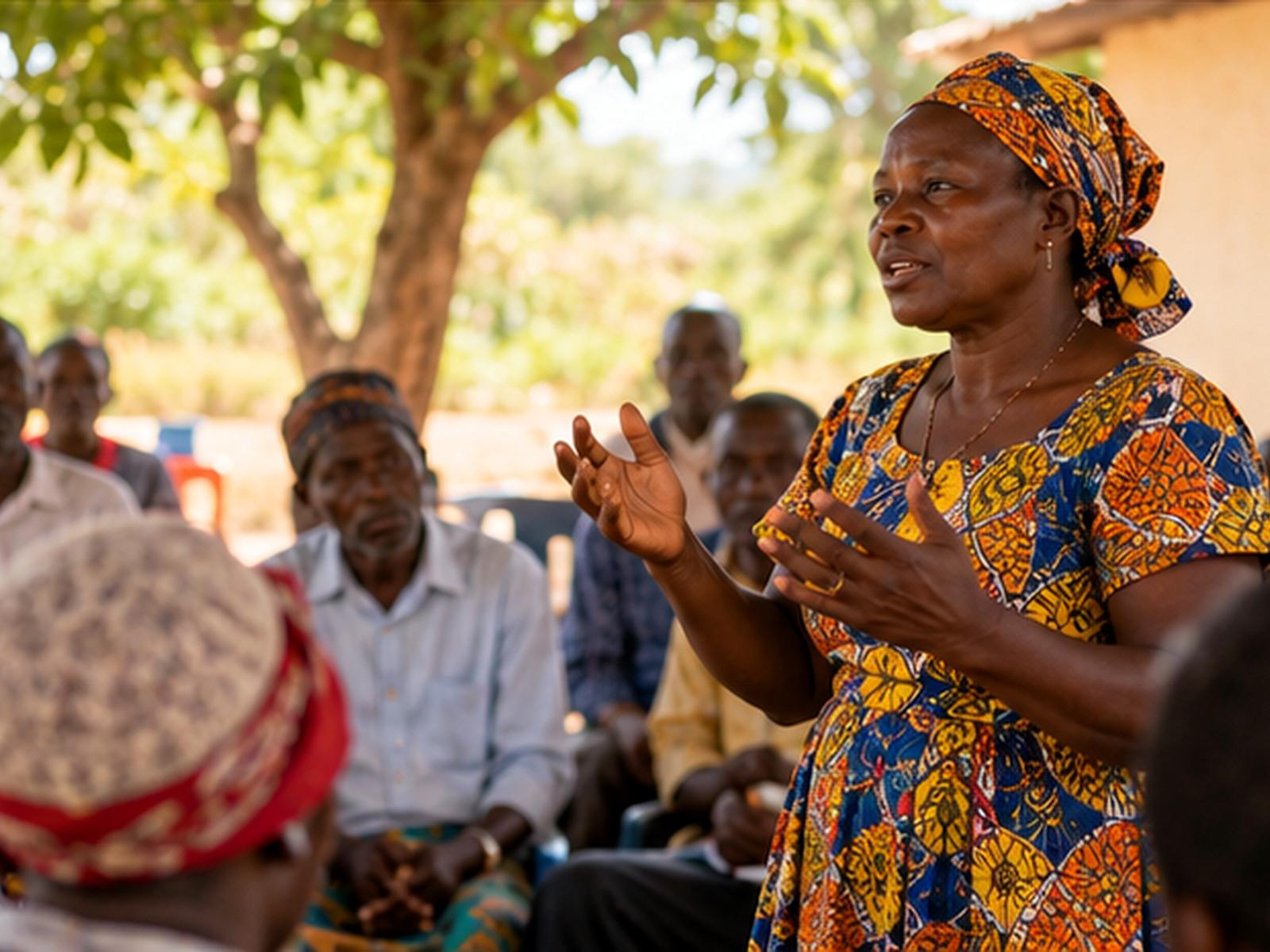
The right support depends on the crisis, access conditions and what affected communities identify as priorities.
Listening to women’s groups and community representatives can improve distribution plans, communication and awareness of the protection concerns arising during a crisis.
Participation should continue beyond emergency distribution. Women’s views can inform recovery priorities, access to services and the rebuilding of livelihoods.
Priorities should be reviewed as the emergency evolves. Practical help is most useful when it reaches the right people, at the right time, in a safe and dignified way.
Emergency needs overlap. A useful response connects practical assistance to the longer-term conditions people face.
• Keep local needs and safe access at the centre of planning.
• Recognise that risks can change after the initial disaster or displacement.
• Link immediate essential support to recovery, dignity and preparedness.
Following severe flooding, local women meet responders to identify safe routes, household needs and where essential items should be available. Their input reshapes a distribution plan. This is an illustrative scenario grounded in the source themes, not an account of an identified Rescue Mission beneficiary.
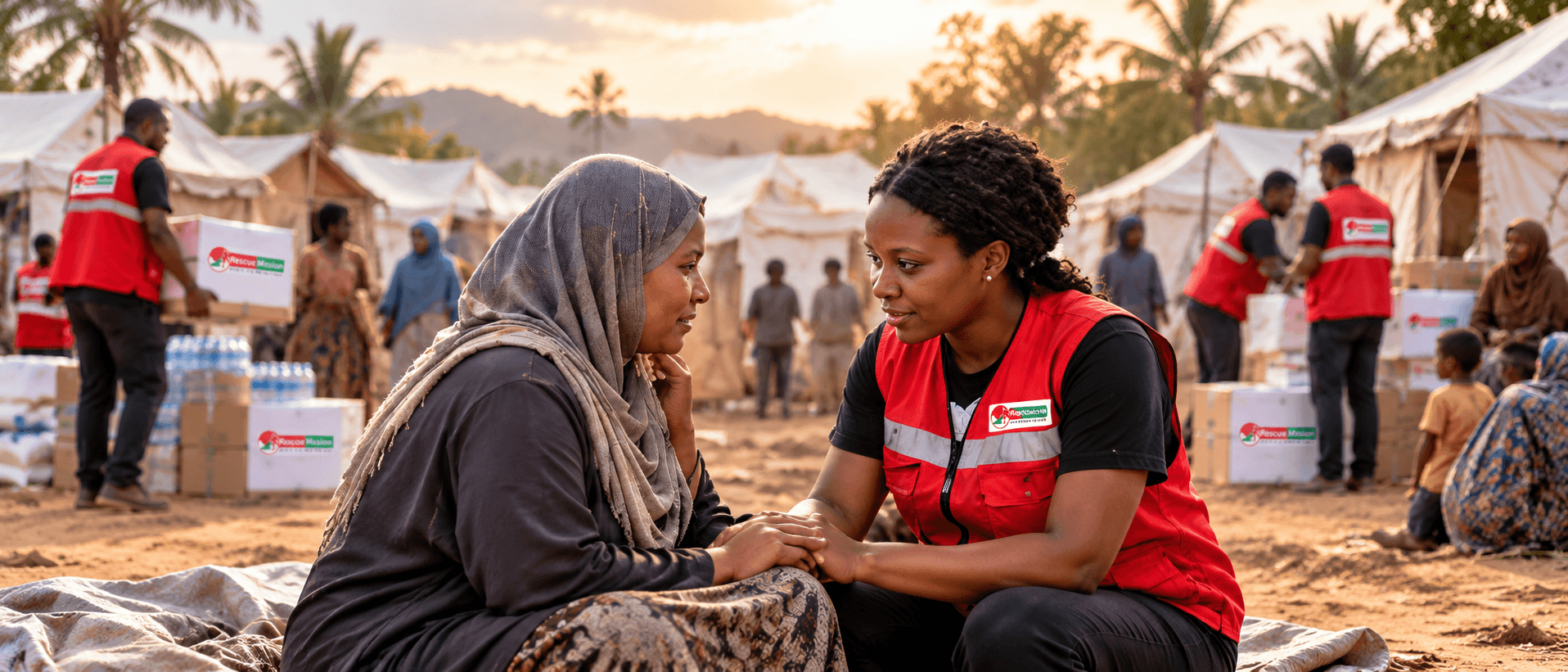
ILLUSTRATIVE SCENARIO: WOMEN PLANNING RELIEF ACCESS
Following severe flooding, local women meet responders to identify safe routes, household needs and where essential items should be available. Their input reshapes a distribution plan. This is an illustrative scenario grounded in the source themes, not an account of an identified Rescue Mission beneficiary.
The source names crises and describes needs. This concept page does not invent an individual’s identity, a first-person testimonial or unverified figures for Rescue Mission projects.
Working with local people helps define what is needed, how support should reach communities and what recovery should look like.
Rescue Mission describes building the capacity of local staff and leaders. ActionAid’s reference page similarly centres local women’s leadership; that model is used only as editorial inspiration here, not as an unverified Rescue Mission programme claim.
Listening, coordination and informed decisions help make aid more practical and respectful.
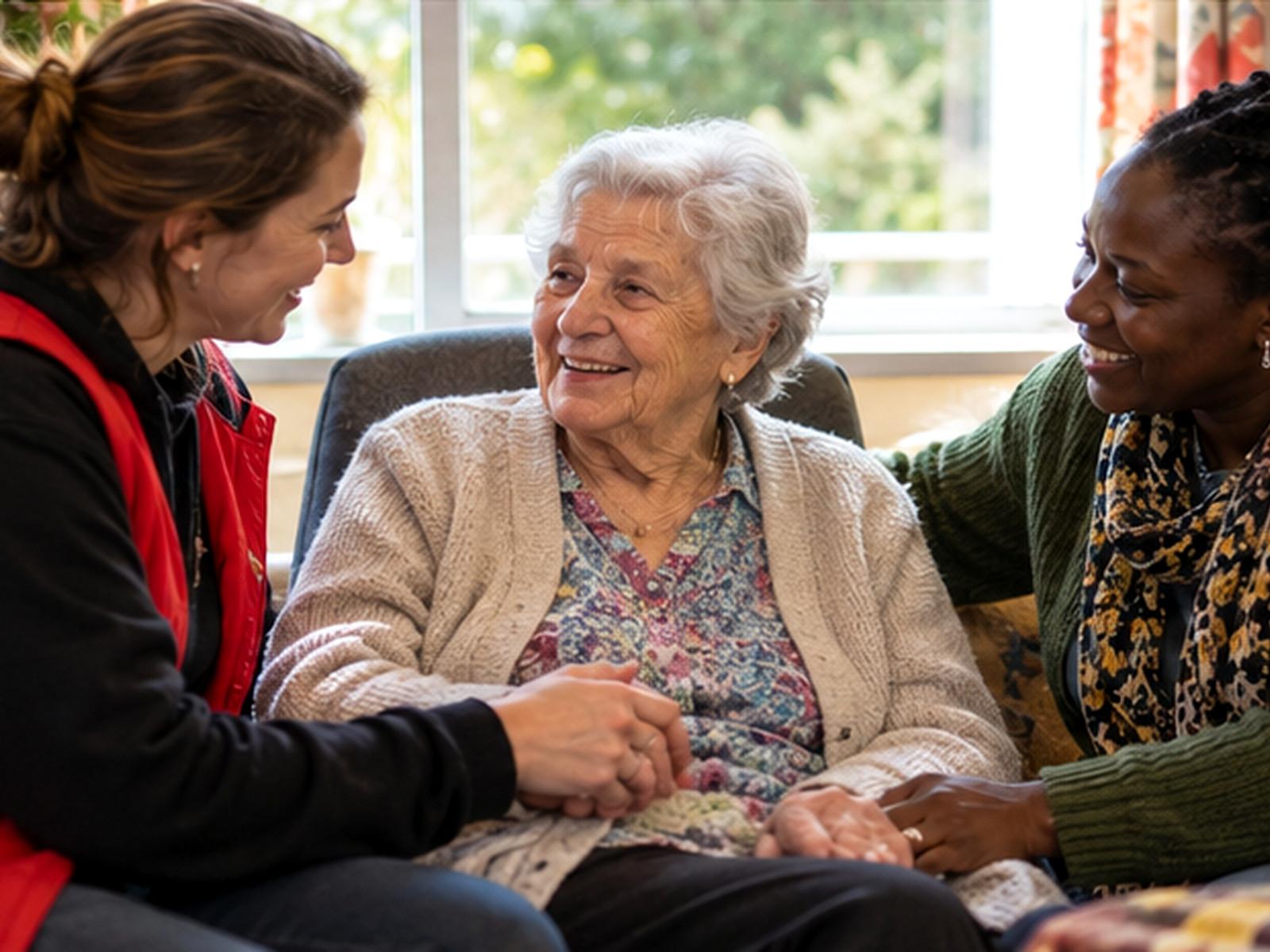
Rescue Mission describes training local staff and community members in disaster preparedness, along with local-led decisions during response and recovery.
A dignified recovery creates space for women’s experience, skills and leadership to shape safer communities in the future.
The work of rebuilding may involve livelihood support, safer services, local planning and disaster risk reduction. Rescue Mission’s published material places this continuing work alongside the first emergency response.
Give towards a response that values the safety and dignity of women in emergencies.
Rescue Mission is a registered company limited by guarantee (Company No. 10413275) Registered Charity No. 1196944 (England & Wales) 20-22 Wenlock Road, London, N1 7GU, England, United Kingdom

